
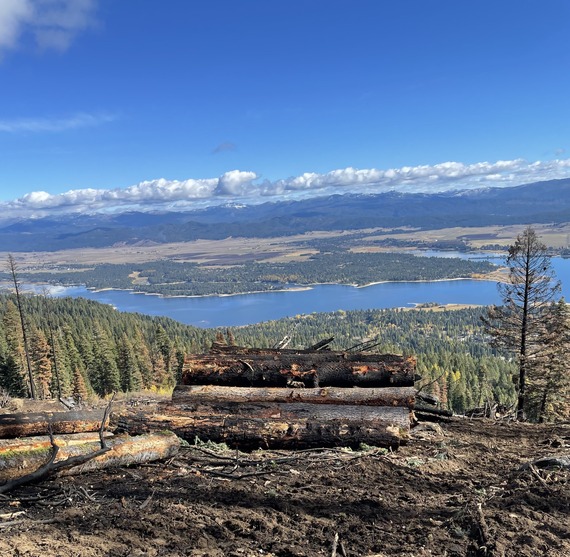
Log deck within the salvage area.
|
Decisions made in the days and weeks following a wildfire can shape forests and communities for decades. Idaho’s response to the Rock Fire shows how acting quickly after a fire can deliver lasting benefits for forests, workers, and public schools.
After the Rock Fire ignited on August 12, 2025 and burned nearly 2800 acres across federal and state trust lands, the Idaho Department of Lands moved with uncommon speed to recover dead and dying timber before it lost value or became a long-term hazard. This salvage effort represented one of the fastest turnarounds the agency’s foresters have seen.
Within days of ignition, IDL staff were already planning salvage operations while the fire response was still underway. Working out of the Rock Fire Incident Command Post, foresters prepared timber recovery plans, conducted fieldwork, and coordinated closely with partners on the Boise and Payette National Forests through the Good Neighbor Authority.
Coordination continued even before the fire was fully contained. As suppression efforts wrapped up, IDL and federal foresters were already preparing complementary recovery efforts across ownership boundaries.
In one case, a Good Neighbor Authority salvage sale on the Payette National Forest sold just days before containment. Additional sales followed within weeks, ensuring that burned timber was recovered while it still held value and before it could add to future fuel hazards.
Urgency matters. Burned timber deteriorates rapidly, reducing its usefulness for wood products and increasing hazardous fuel loads on the landscape. When dead trees are left standing or fall over time, they can contribute to more intense and dangerous fires in the future. Idaho’s swift response reduced these risks while ensuring that usable wood supported local jobs and generated revenue for public schools and other beneficiaries.
On federal lands, this kind of rapid post-fire action is the exception rather than the rule. Salvage after wildfire is relatively rare and often slow, with many burned areas never seeing recovery efforts begin before the wood loses value. Lengthy planning processes and procedural delays mean fire-killed trees frequently decay, fall, or become heavy fuels long before they can be used, eliminating economic opportunity and increasing future wildfire risk.
Scientific research helps explain why timing is so critical after any large scale tree mortality event. A 2025 peer-reviewed study examining forests in California following severe drought and insect-related tree death found that removing dead trees reduced surface fuels, lowered modeled fire severity in future decades, and improved regeneration of fire-adapted tree species.
While the study focused on non-fire mortality, it addressed the same challenge managers face after wildfires when large numbers of dead trees remain on the landscape. The researchers also concluded that although carbon stored on site was lower in the short term, reducing the likelihood of severe future wildfire could protect far more carbon over time by avoiding catastrophic losses.
The study underscored the importance of acting quickly. Delays allow dead trees to fall and accumulate as heavy fuels, increasing the potential for extreme fire behavior years or even decades later. Early action limits that buildup and creates better conditions for forests to recover in a more resilient and fire-adapted state.
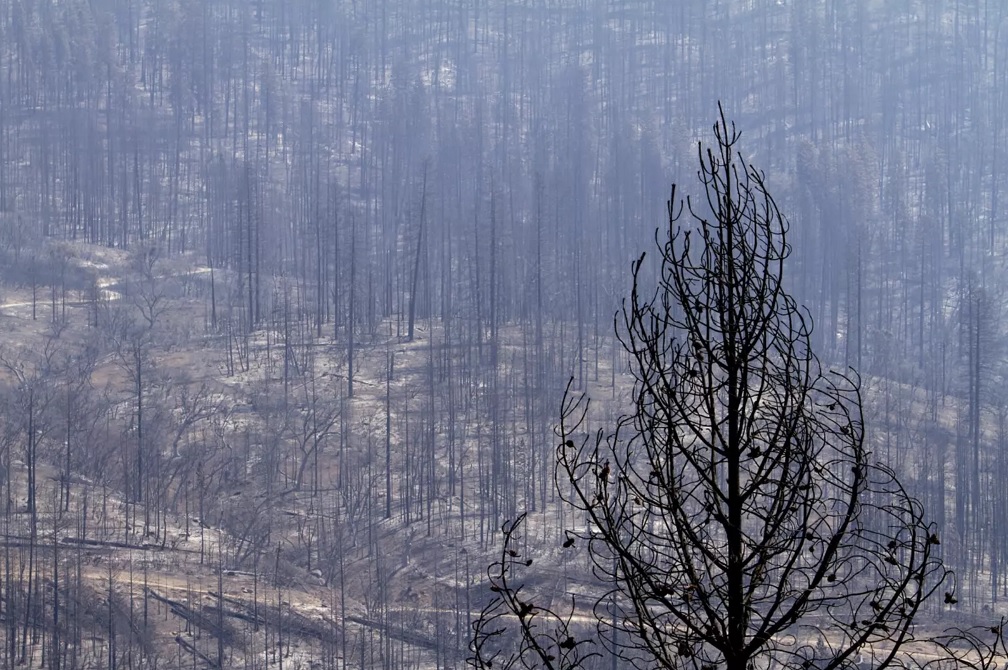
Post-fire conditions on California’s Stanislaus National Forest, 2023
|
The Rock Fire salvage effort delivered real results. Crews recovered hundreds of thousands of board feet of timber, put people to work in the woods and at local mills, and generated revenue for Idaho’s public school endowments. Rather than becoming a long-term hazard, these burned forests continued to provide value to local communities while reducing future wildfire risk.