
Indigenous Peoples’ Day on October 12 offered a timely reminder that Indigenous peoples actively managed forests across the American West for thousands of years.
They cut trees, harvested wood and deliberately set fires to provide homes, canoes, food and wildlife habitat. Many landscapes encountered by European settlers reflected generations of human stewardship.
That history presents an uncomfortable contradiction for preservationists who argue that forests are best protected by limiting human intervention. Indigenous ecological knowledge challenges the assumption that western forests were once untouched wilderness.
Along the Pacific Coast, Indigenous peoples developed sophisticated woodworking traditions long before European settlement. Using tools and techniques suited to massive western red cedars, they harvested timber for plank houses and canoes.
A study published in Science traced the rise of extensive Northwest Coast cedar woodworking traditions to the availability of large cedars thousands of years ago.
Archaeological evidence of culturally modified trees also documents harvesting of living trees. Such evidence includes trees bearing ancient tool marks and partially worked cedar logs. These remains show that cutting and using trees was an established part of Indigenous life, not a practice introduced by European settlers.
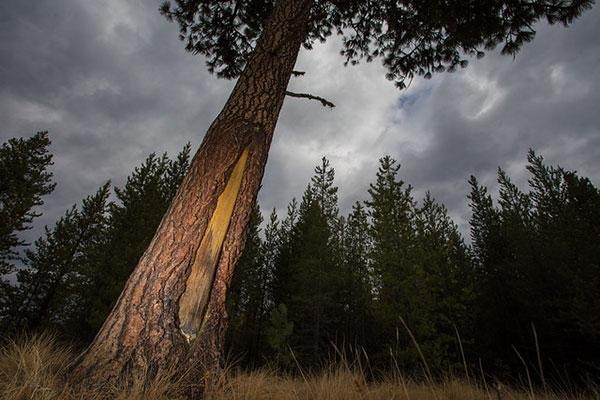
Tribes intentionally shaped growing forests. In Oregon, Indigenous burning maintained open oak woodlands, encouraged food plants and improved habitat. Even Yosemite Valley, often portrayed as pristine wilderness, bears the imprint of more than 4,000 years of Indigenous land use and burning.
According to the National Park Service, when traditional burning stopped, trees encroached on meadows and forests grew denser. The agency now uses prescribed fire and mechanical treatments to address those conditions.
Yet some environmental activists openly dismiss Indigenous knowledge when it conflicts with preservationist priorities. One critic attacked tribal co-management of federal lands and described traditional ecological knowledge as “more analogous to mythology and superstition than science.”
His argument exposes a contradiction. In political debates over public lands management, Indigenous stewardship is celebrated when it supports restricting land use, but questioned when tribes support timber harvesting and active forest management.
That tension also surfaced in Oregon in 2017, when anti-forestry organizations opposed a proposed partnership involving tribes and Lone Rock Resources to acquire and manage the Elliott State Forest. Racial justice advocates, including the Portland NAACP, criticized the opposition for failing to meaningfully engage the tribes involved.
Congress has provided tools to expand tribal management on federal forests. The Tribal Forest Protection Act allows tribes to propose projects on federal lands to protect tribal forests and resources from threats such as wildfire.
Good Neighbor Authority and tribal self-determination agreements can provide additional pathways for tribes to help implement forest treatments, subject to each authority’s requirements. These arrangements can support thinning, timber removal, fuels reduction and reforestation, while allowing tribes to apply local experience and protect resources important to their communities.
Tribal governments are very diverse and can have different views about individual management efforts, but Indigenous history makes one point unmistakable: human management has long been part of our forests.
The question for preservationists is straightforward. If people helped shape and sustain these landscapes for thousands of years, why treat active management as an intrusion today?